★ A shorter version of this essay, without footnotes, was later published in Future Of Jewish on July 4th ★
“The Hebrew Bible, the Jewish people, Jewish thought, Jewish morality, and Jewish law have all contributed immensely to the broader Western philosophical, ethical, legal, and political canon. Far from dismissing Jewish influence on the West as irrelevant, destabilizing, or even menacing, Westerners of all religious stripes should—if anything—feel a debt of gratitude for all that Hebrew Scripture, Judaism, the Jewish people, and the broader Jewish tradition have contributed to our collective civilization. Judaism and Jewish thought have directly affected everything from personal morality to interpersonal relations to the development of entire modern legal and political orders rooted in biblical morality, such as the English common law, the U.S. Constitution, and the broader Anglo-American conservative political tradition.”
—Josh Hammer, Israel & Civilization: The Fate Of The Jewish Nation & The Destiny Of The West—
✦✦✦
I love America. I was born here, as were my parents, as were my grandparents, as were my great-grandparents. After my great-great-grandparents fled the chaos of Weimar Germany in the 1920s (before things turned really bad), four subsequent generations of Hochdorfs went on to experience a nation that has been nothing but good to us. And every man in my family, in turn, has responded to this goodness by serving in every one of America’s major conflicts since World War II.
Coming from a military family and serving in the Army myself, it’s hard to imagine not being patriotic. I don’t think I could ever do it. I’ve suggested in previous writing that America’s decline might be irreversible, but there is a difference between noticing this and wanting it to happen. There’s something treacherous, gross even, about Americans who hate America or are ashamed of it. This country—with its cowboy/pioneer mythos, stunning and diverse natural landscapes, large houses, Second Amendment, and colorful history of outlaws, astronauts, charlatans, poets, wild-eyed preachers, circus freaks, explorers, saloon madams, cannibals, and oil tycoons—is truly unlike any other country. (To say nothing of America’s Costcos, Bass Pro Shops, and Bucees gas stations, its big trucks, bigger flags, daisy dukes, aviator sunglasses, 64 oz. Big Gulps, fatty brisket, the best music of the 80s/90s/00s, rodeo, football, professional wrestling, and 24-hour Waffle Houses; which our cultural elite like to mock or “celebrate ironically” as rural embarrassments, but are things I genuinely love and hope never go away in my lifetime.)


I’ve traveled all over the world, and while other countries certainly have their charms and interesting facts about them, and while I’ve had plenty of adventures and made plenty of friends in those countries, I’m astonished when I visit most places at what I can only describe as a mentality of smallness; people’s unwillingness to take up space, to assert their will, to defend themselves, to think big, to stand up to bullies in their government or thugs on their streets. I’m constantly amazed at populaces who are willing to live in cramped apartments without air conditioning; who squeeze themselves into tiny cars to drive on lanes narrower than tabletops; who allow trash to pile up on their sidewalks while rats, pigeons, and packs of wild dogs roam all over; and who not only allow their children to disrespect them, but allow their children to be exposed to sex and drugs at a very young age so they won’t appear “controlling”. This is the norm around most of the world. Poverty, filthiness, weakness, fear, intimidation, envy, apathy, demoralization, and a general acceptance that all of the above are fine. Nobody waves at each other. Nobody smiles or nods politely while passing in the grocery store. If an American dares suggest “You don’t have to live this way. You can have a society where your residence is bigger than a shoebox, your vehicle doesn’t look like it was made in Whoville, your police officers actually police crime not ‘microaggressions’, your community doesn’t frown on you for enforcing rules on your kids, and your neighbors say ‘Howdy’,” we get stared at like we’re from Mars.
By contrast whenever I return from my travels to my home state of Texas, there is no mentality of smallness to be found. Instead I come into contact with people who think and work and speak and act and laugh big. As a result, we as citizens reap benefits that are pretty unique from most of the rest of the world: a lot of private property, lower and fewer taxes, robust self-defense laws, parental sovereignty, cheap energy, state-of-the-art (albeit expensive) healthcare, cutting edge scientific research, school choice, a strong culture of entrepreneurship and volunteerism, and competent law enforcement. America is not a perfect place of course. It has a lot of problems (which I spend plenty of time writing about). But while the general public in many parts of the world try their best to appease bureaucrats who are diminishing their way of life “for the sake of the planet” or some other bullshit cause, we on the other hand are a land and people of unapologetic abundance.
I celebrate that. How the hell could I not?
If ever I felt forced to permanently leave the U.S.—out of fear of my own life or fear of my family’s future, due to the same social contagion that infected Weimar Germany almost a hundred years ago—I would be heartbroken. It would be a severe and gut-wrenching loss. America historically has been very good to the Jews.
Which is why, frankly, I’m worried. Honest to G-d worried.
In America’s 250th year, there has been a disturbing rise in antisemitism in both the country’s politics and daily life. Since 2023, over 70% of religion-based crimes have been against Jews in synagogue environments (a 63% jump from 2022) and there’s been a 140% increase in single-bias crimes against Jews in public spaces (which include acts like assault, vandalism, and threats). What’s more, these crimes are typically being committed by Americans between the ages of 18-30; young adults who have become convinced that the Jewish people are behind their economic and social struggles. This ties into the rise in antisemitism politically, which has occurred mainly on the left but is also spreading rapidly on the right.
Whilst the left argues that American Jews who support Israel are “pro genocide” and root their hostility toward Israel in Marxist postcolonial theory, on the right the charge is that to be Jewish is to be fundamentally un-American and even a threat to America due to “dual loyalty” to Israel.¹ The only “real Americans” then, according to this new antisemitic right, are Christians², and the Jews should be counted among our nation’s other enemies (illegal immigrants, trans activists, feminists, critical race theorists, Antifa, etc.)
Such a narrative—though a favorite among “America First” podcasters whose careers ironically are propped up by Arab investment—reeks of historical illiteracy. Rightwing antisemites forget (which is to say, they ignore) how intertwined the story of the American founding is with diaspora Jewry.
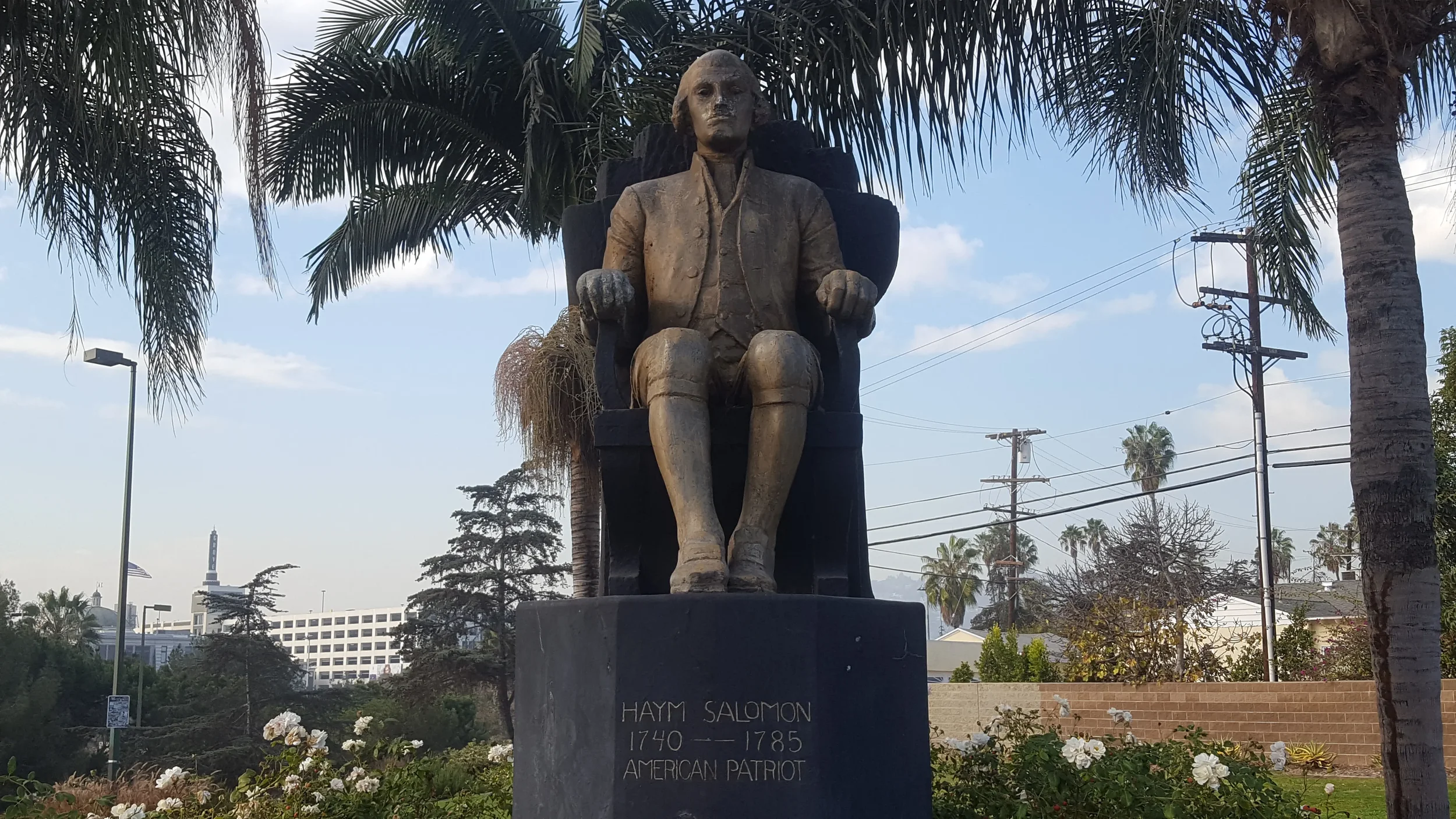
Take, for example, the oft-forgotten founding father Haym Salomon: a Jew who immigrated from Poland to New York in 1775 and immediately became involved with the Sons of Liberty; an underground colonial resistance network engaged in acts of sabotage against occupying British forces in the decade leading up to the Revolutionary War. But Salomon wasn’t just a saboteur (or even primarily that). He was a highly effective financier, who between 1775-1783 succeeded in raising funds for the patriot cause amounting to approximately $650,000 (the equivalent of $20 million today). In 1781, when the prospects of the Revolution were looking grim, Salomon had difficulty in convincing former donors to continue giving funds to the cause; so he donated his entire personal fortune to fund George Washington’s Yorktown campaign (and as a result, died penniless in 1785). Washington’s Yorktown campaign then, in a stunning turn of events, went on to trap Cornwallis’s army and end the Revolutionary War in America’s favor; which means that—yes—without Jewish financing, an independent United States never would have been a reality. Instead, absent Jewish backing, members of the Continental Congress and officers in the Continental Army would have been hunted, apprehended, tried as traitors to the crown, and hanged.
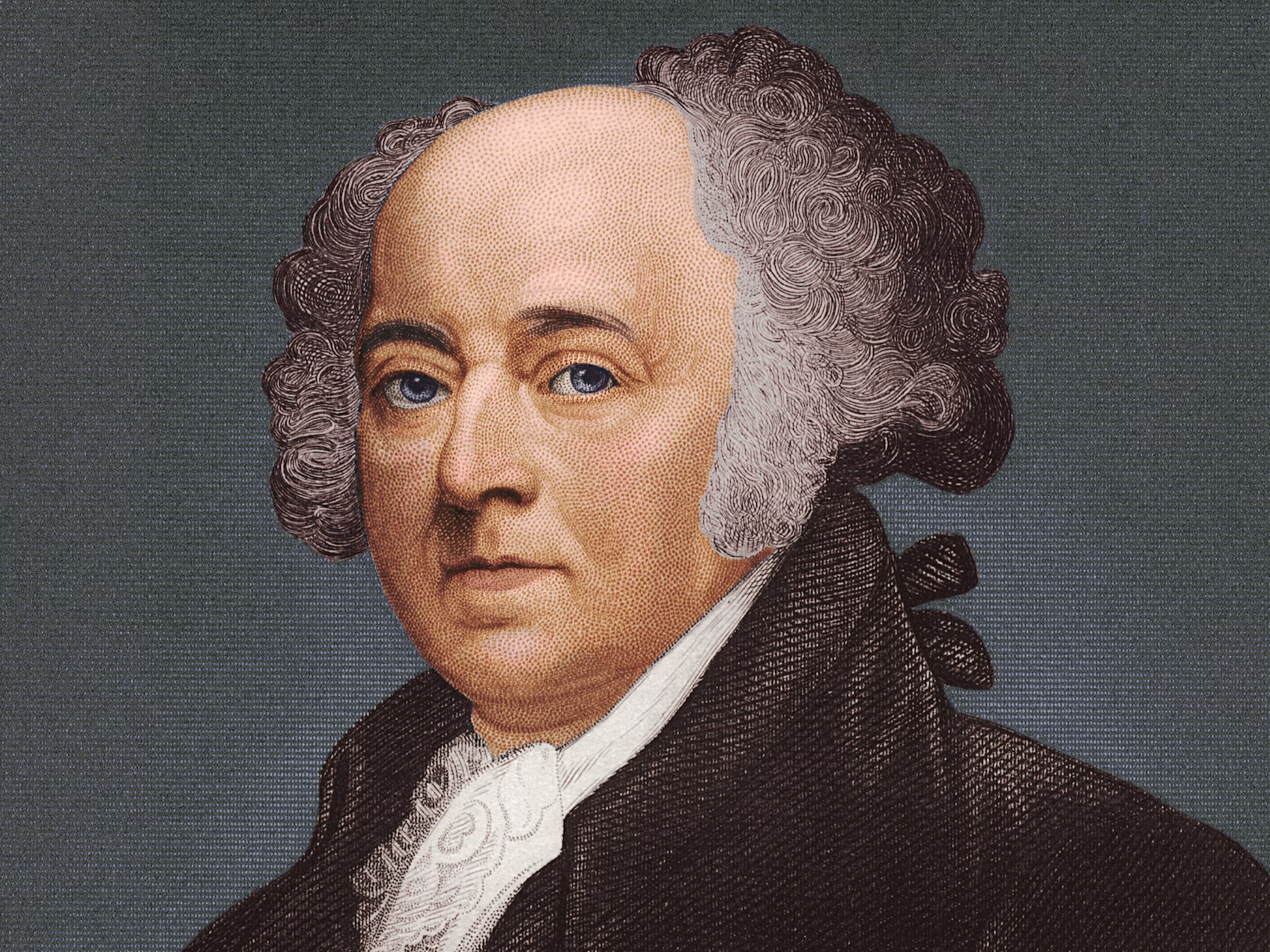
For another example of how the American founding is intertwined with Jews and Judaism, we could look to the actions of and direct quotes from our most prominent founding fathers: Washington, Adams, Madison, Hamilton, and Franklin.
In George Washington’s 1789 letter to the Hebrew Congregations of the City of Savannah, he writes:
“May the same wonder-working deity who delivered the Hebrews from their Egyptian oppressors and planted them in the promised land, and whose providential agency has lately been conspicuous in establishing these United States, still continue to water the Jewish people with the dews of heaven and make the inhabitants of every denomination participate in the temporal and spiritual blessings of that people whose G-d is Jehovah.”
In John Adams’ 1808 letter to the Dutch minister F.A. Van der Kemp, he rebuked Voltaire’s antisemitism when he wrote:
“How is it possible that he [Voltaire] should represent the Hebrews in such a contemptible light? They are the most glorious nation that ever inhabited this earth. The Romans and their empire were but a bauble in comparison to the Jews. They have given religion to three quarters of the globe and have influenced the affairs of mankind more—and more happily—than any other nation ancient or modern.”
In fact John Adams, 11 years later, prefigured Herzl’s Zionism, when in 1819 he wrote a letter to Jewish playwright Mordechai Manuel Noah which said: “I really wish the Jews again to have in Judea an independent nation.”
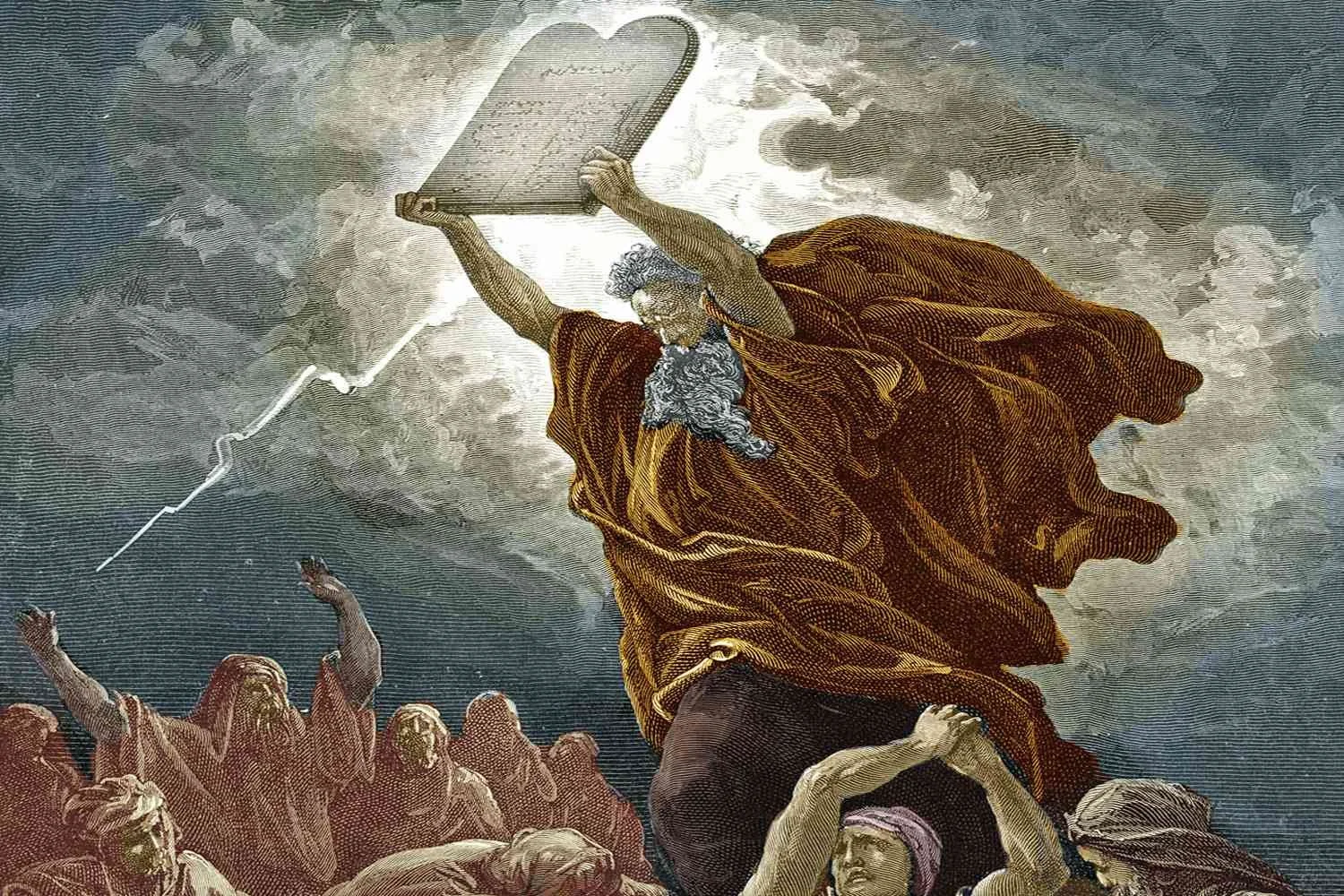
James Madison admired the Jewish people so much that he studied Hebrew at Princeton from 1769 to 1771. Alexander Hamilton, too, attended a Hebrew school in the West Indies during his boyhood in the early 1760s (and may be another Jewish founding father, though this is still a matter of debate). Benjamin Franklin, though a self-described “thorough deist”, was so enamored by the stories found in the Torah, that he drew Moses dividing the Red Sea and wanted it to be the Great Seal of the United States.
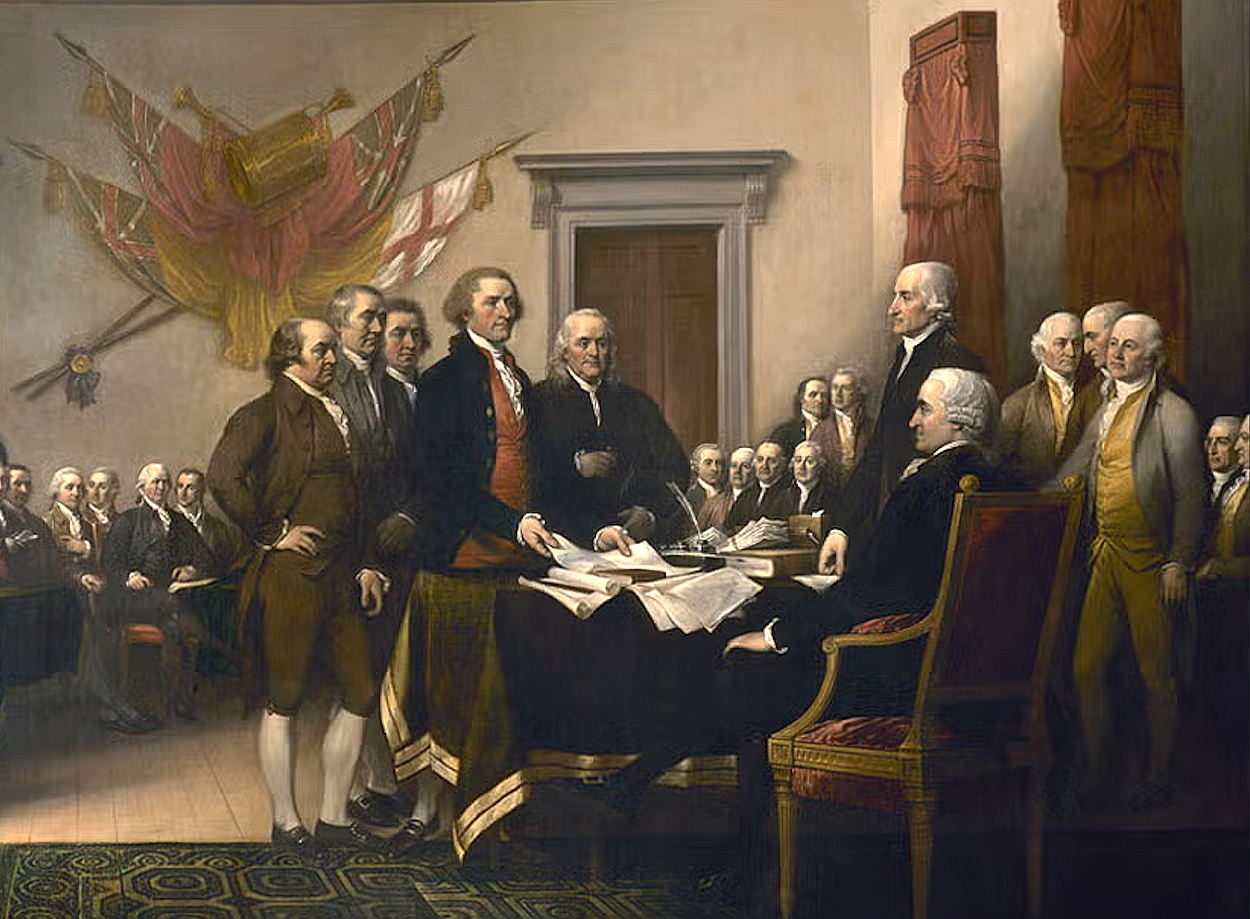
But if the activities of Haym Salomon and the opinions of the “main” founding fathers are not enough, there’s also the fact that the most quoted and referenced book of the Bible by the founders in their 15,000 letters and speeches was not any book in the New Testament (which was quoted only 30% of the time biblical references were made by them), but Deuteronomy (quoted 70% of the time a biblical reference was made). And it’s interesting: why would the founding fathers want to reference Deuteronomy so much? Especially more than the words of Jesus or of his apostles? Could it be that—as the founders were contemplating how to build a nation—they saw special significance in the Torah (which literally means “law”)? Well, yes. That and the founders were not shy in stating their belief that their band of states were analogous to ancient Israel, and Britain likewise analogous to Pharaoh. For the signers of the Declaration, the Hebrew scriptures provided a robust moral and poetic vocabulary that allowed the colonies to compare their leaving England to Israel leaving Egypt.
And yes, to those rightwing antisemites whose soft little ears can’t seem to bear it, all of this when taken together means that the United States was originally a Judeo-Christian country, not just a Christian one. We can view the founding of the United States as—maybe not a “proto-Zionist” experiment exactly—but certainly as an experiment in hybridization that occurred 172 years before the reestablishment of Israel in 1948.³
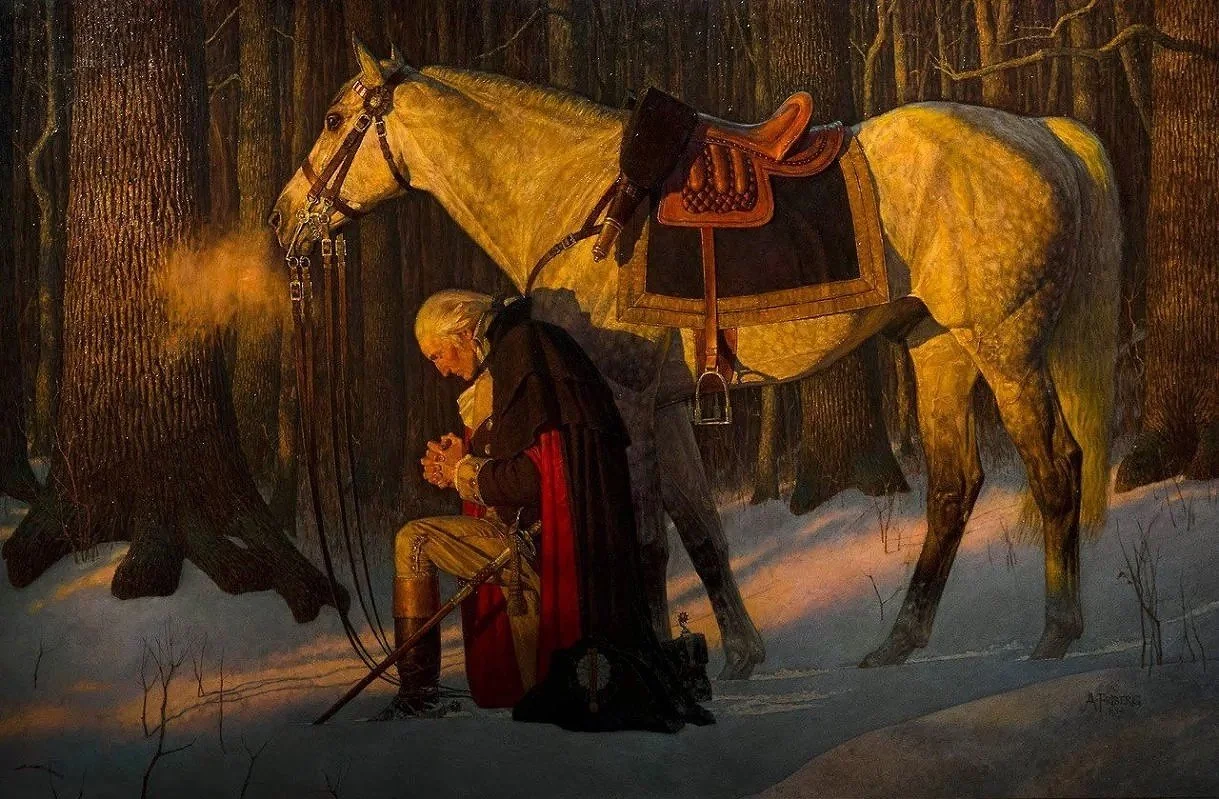
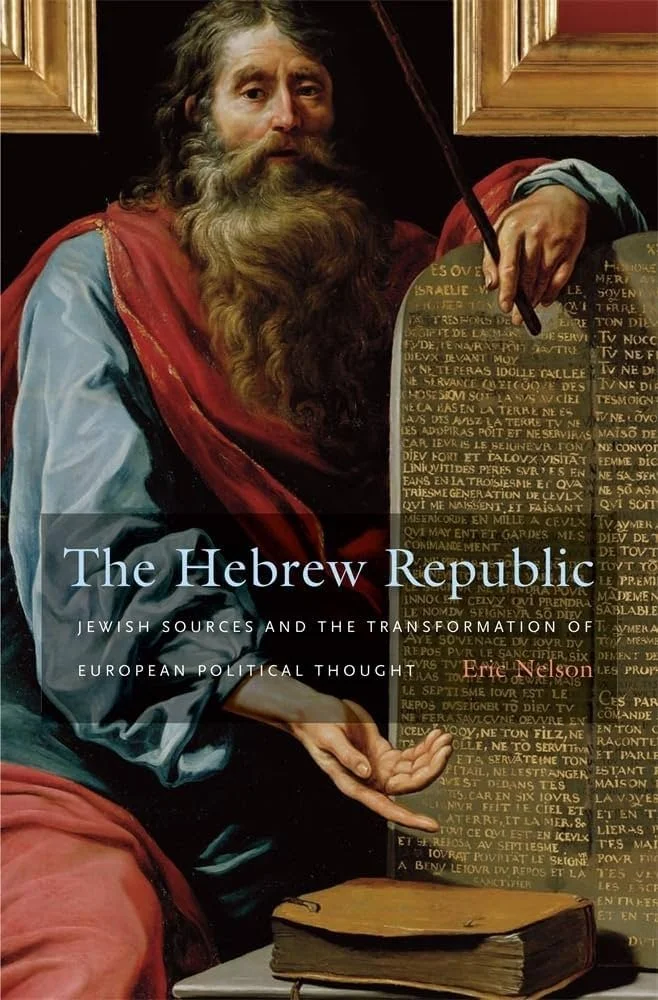
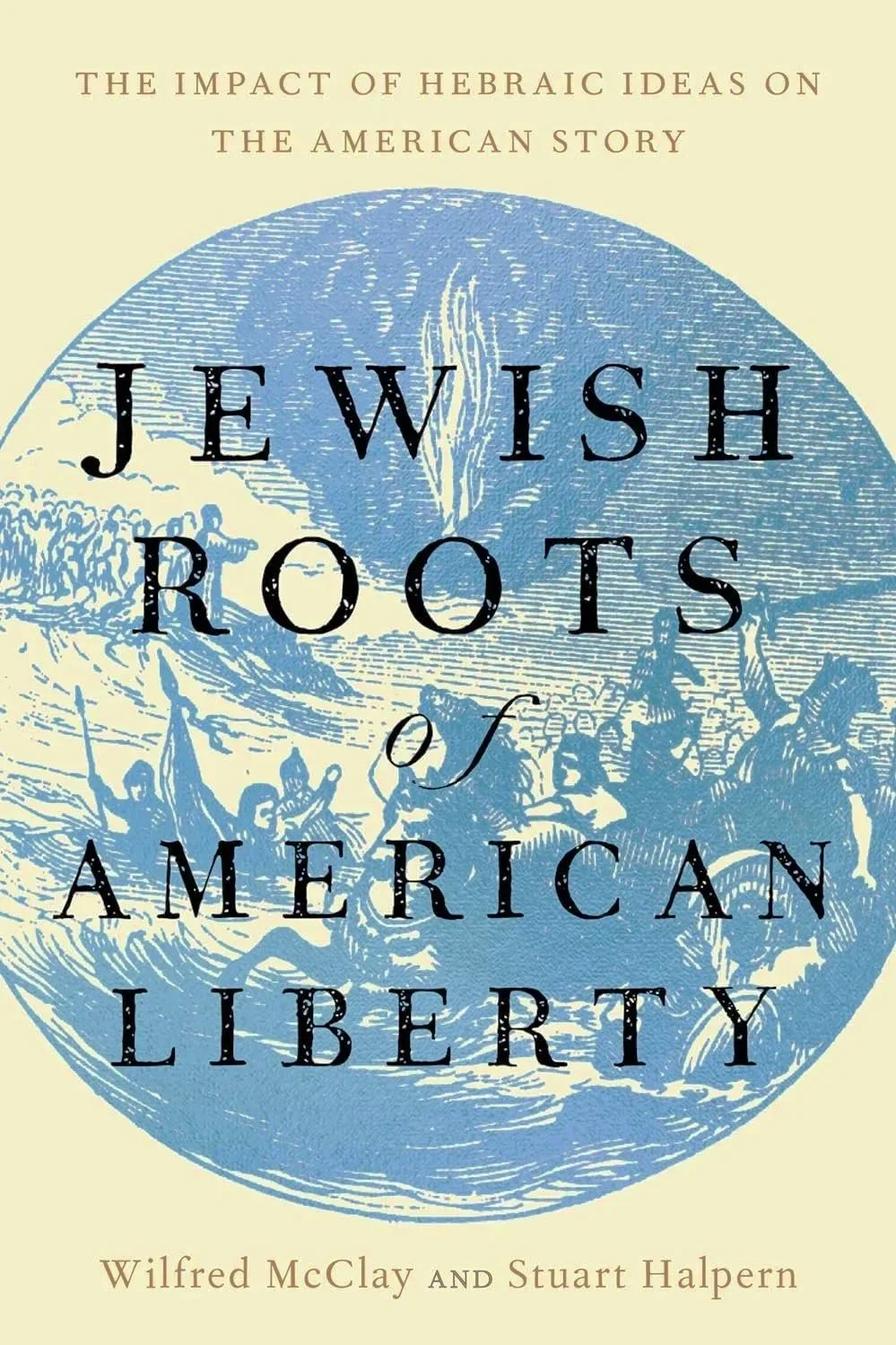
Now, to be clear, even though the United States was originally a Judeo-Christian country, the founders still authored founding documents that—when closely read—betray a deistic ontology, and ancient Greco-Roman philosophers like Cicero and Cato the Younger were also a huge influence on their thinking. But in two recent books, The Hebrew Republic by Eric Nelson and Jewish Roots Of American Liberty by Wilfred McClay and Stuart Halpern, we discover that even with the confluence of Enlightenment deism, Christian Unitarianism, and classical Greco-Roman thought together informing the philosophical foundation of the United States, Judaism still remained front and center as the primary source of inspiration.
Giving a little more background as to why this was, Nelson explains in The Hebrew Republic:
“Readers [in the 17th and 18th centuries] began to see in the five books of Moses not just political wisdom, but a political constitution. No longer regarding the Hebrew Bible as the ‘Old Law’—a shadowy intimation of the truth which had been rendered null and void by a ‘New Dispensation’—they increasingly came to see it as a set of political laws that G-d Himself had given to the Israelites as their civil sovereign. Moses was now to be understood as a lawgiver and the founder of a politeia in the Greek sense. The consequences of this reorientation were staggering; for if G-d Himself had designed a commonwealth, then the aims of political science would have to be radically reconceived. Previous authors had sought guidance from ancient philosophers or from the schoolhouse of human history; now, however, they would have to look elsewhere… to the perfect constitution designed by the omniscient G-d. It became the central ambition of political science to approximate, as closely as possible, the paradigm of what European authors began to call the republica Hebraeorum (republic of the Hebrews): to compare it both to ancient and modern constitutional designs and thereby to see where the latter were deficient.”
But, Nelson notes, these 17th and 18th century European and colonial readers encountered an issue when they tried to derive ideas for new laws based on 3,700-year-old scripture from the Levant:
“How was one to know and understand the political constitution sketched out in the Hebrew Bible? The Biblical text itself gave notoriously fragmentary and inexact (not to say contradictory) details about its operation. Where could one turn for guidance? This fundamental question was definitively answered by the Christian Hebrew scholars of the day as such: to understand the Hebrew Bible, one should consult the full array of rabbinic sources that were now available to the Christian West. One should turn to the Talmud and the Midrash and to the targums. […] As Henry Ainsworth put it in his Annotations Upon The Five Books Of Moses, one should consult ‘Hebrew doctors if one wishes to give light to how the ordinances of Moses touched the external practice of the commonwealth of Israel, which the rabbis did record, and without whose help many Jewish legal rites (especially in Exodus and Leviticus) will not be easily understood.’”
Pause for a moment and grasp what Nelson (quoting Henry Ainsworth) just revealed. In order to understand how specifically the Torah could inform the laws of new republics, 17th and 18th century European and colonial readers—the majority of whom were Protestant Christians, and included the founding fathers of the United States—relied upon the Talmud, the Midrash, and other writings of rabbinic Judaism.
Isn’t that interesting? I think that’s interesting. Really interesting actually, when I consider all the “America First” podcasters whining and crying about how the concept of “Judeo-Christian” civilization is made up and illegitimate.
And driving the point home even further that the founding fathers a) admired the Jewish people and Jewish citizens of the colonies, and b) relied heavily not just on the Torah but on the Talmud and Midrash when crafting America’s first laws, McClay and Halpern note in their book Jewish Roots Of American Liberty:
“The founding era is replete with appeals to the Jewish ‘republic’ described in the Hebrew Bible as a divinely inspired model for republican government worthy of emulation in their own political experiments. From various Biblical passages and Jewish commentaries chronicling the Hebrew polity, some American patriots derived support for specific republican principles, such as government by consent of the governed as exercised through representatives chosen by the people. […] In an influential 1775 sermon preached to Massachusetts’s highest public officials, the president of Harvard College, Samuel Langdon, opined: ‘The Jewish government, according to the original constitution which was divinely established, if considered merely in a civil view, was a perfect republic. Every nation has a right to set up over themselves any form of government which to them may appear most conducive to their common welfare. The civil polity of Israel is doubtless an excellent general model; at least some principal laws and orders of it may be copied to great advantage in more modern establishments.’”
By stomping their feet and pitching a fit like toddlers that there’s nothing “Judeo” about America, rightwing antisemites are actually expressing a willingness to erase the truth of the American founding to suit their sick purposes. I won’t let them. And you shouldn’t either.
This July 4th, on America’s 250th anniversary, we as a people should commit ourselves to doing four things: One, let’s honor our fallen soldiers who gave their lives and futures so that we could live in peace and enjoy futures for ourselves, and also honor their families who still grieve. Two, let’s praise G-d for blessing us and never forsaking us, even when we so often forsake Him. Three, let’s let our hair down (for those of y’all who have hair), eat a lot of barbecue, drink a lot of beer, crank up our rock and country music, and party like it’s 1999 1776. And finally four, let’s send a clear message to leftwing and rightwing antisemites that—rather than this nation “not being the place for Jews”—this nation is actually not the place for them. It is they, not me and not my friends or family, who are unworthy of Liberty’s bounty. It is they, not me and not my friends or family, who are the real blight on our great republic.