For the past several weeks I’ve been obsessed with Johnny Blue Skies & The Dark Clouds’ new LP Mutiny After Midnight.

Like, no kidding, this album slaps so hard I feel like I need to change my locks, file a restraining order, and wear big sunglasses in front of the bank teller.
I’ve never tried cocaine and I don’t plan to, but somehow I know that if cocaine were an album it’d be this one.
But enough of my hyperbolic praises.
Sturgill Simpson’s alter ego “Johnny Blue Skies” combines the gravelly roadhouse voice of Ray Wylie Hubbard with elements of disco, funk, and a synth-pop grandiosity reminiscent of ZZ Top’s Afterburner… all while still being a country album. Hailing from a family of Appalachian coal miners in small town Kentucky, Simpson’s usual sound over the course of his 22-year music career has been characterized by the pedal steel, guitar twang, shuffle drumming, and themes of spite and woe one comes to expect from the outlaw genre; a sonic repertoire shared by other contemporary singers such as Colter Wall, Paul Cauthen, and the band Whiskey Myers. But Mutiny After Midnight represents a break from that outlaw sound, with its warbling keyboard, sultry saxophone, and four-on-the-floor rhythms bringing listeners back to the era of shag carpets, bell bottom jeans, and cigarette vending machines.
Mutiny is hot, sweaty, and gritty in all the right ways, and an album where raging tempers play second fiddle only to even more raging libidos. You’re not supposed to think about its lyrics or their inspiration, you’re just supposed to feel its pulsating stomp and swagger (and preferably in a dark crowded dive bar at 2 AM). There are other albums for broken hearts and goodbye sticky notes. This one’s for broken noses and switchblades.

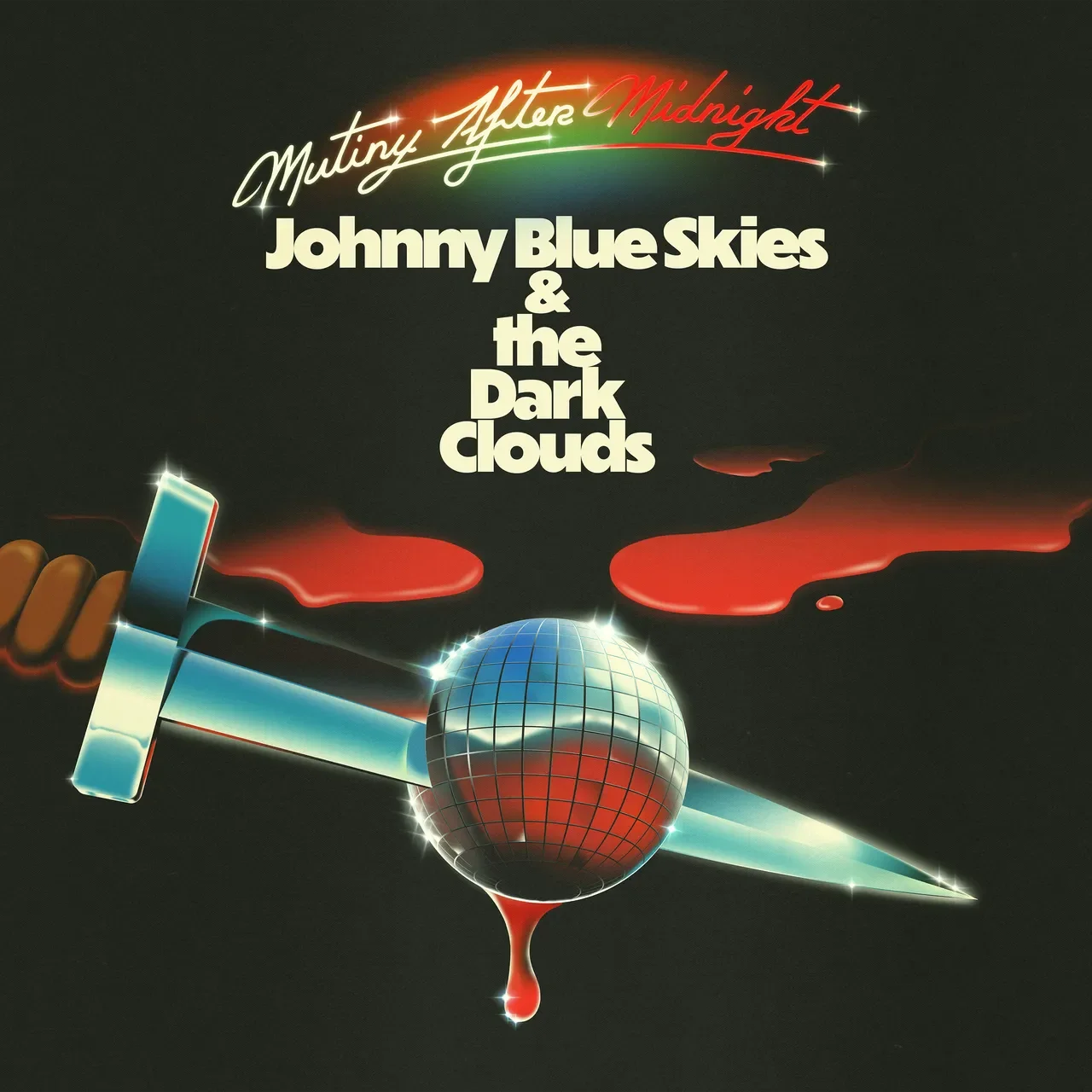
My favorite song on the list is “Situation”. A song about a man who’s telling his girlfriend that the first time he saw her walk away, all he could think about (while staring at her ass) was how he wanted her so bad it was… a situation. Though the extent to which overt sexual language can be overt without slouching into off-putting raunchiness is (and will always be) a fuzzy and ever-shifting social boundary, even Simpson’s racier lyrics (“Your body’s hotter than a brothel in Guam”) possess an originality that’s a welcome reprieve from Corporate Country’s worn-out use of “cold beer”, “dirt roads”, and “feet on the dash”. The opening drums of “Situation” burst forth like a starter’s pistol and clear a pathway for clattering tambourines, rustling shakers, and a rolling bass foundation that’ll have you bopping your shoulders and rocking your hips from side-to-side before you even realize what you’re doing.
That same energy continues in “Excited Delirium”, where guitars explode into glorious riffs that make a listener wanna ascend to Valhalla on a winged pegasus or tear down I-35 at 110 mph. (Do the latter long enough and you’ll do the former.) Again, you can compare this track on Mutiny to ZZ Top’s Afterburner and in particular their song “Delirious”, but there’s also traces of Deep Purple’s “Highway Star” and Travis Tritt’s “T-R-O-U-B-L-E”.
Then there’s “Everyone Is Welcome”. Number 10 on the track list, and one I can think of no other way to describe… except… except… it’s Miami in the 198os. You’re a ponytailed goateed private investigator wearing a white suit and driving a hot red convertible; your dutiful sidekick follows overhead in a helicopter, and you’re both on your way to rescue your client—a stunning Cuban damsel—whose being held hostage by her violent drug lord ex-boyfriend. This is the vibe (if not the meaning) of “Everyone Is Welcome”, where analog and digital synthesizers bring a beachfront sunset into our imagination’s view, and saxophone solos haven’t sounded so holy-shit-ON-FIRE since Bill Clinton played for Arsenio Hall in ‘92. (The entire track played on a loop feels like getting lost in an Old Spice commercial and never wanting to find your way out.)
But if the result of Simpson’s experiment being Johnny Blue Skies is supposed to be a musical soul train barreling straight for America’s neon-lit heartland, that train risks being derailed by Mutiny’s second-to-last song “Ain’t That A Bitch”: a fatuous anti-MAGA protest anthem as out-of-place in the album’s overall groove as… well, progressivism in small town Kentucky. Why exactly Simpson decided to send a Hicklib signal to cowboy cosplayers in Portland that his brand of psychedelic yeehaw was “safe” for them to enjoy, I dunno. But nothing of value is lost in terms of the Mutiny After Midnight experience if a listener skips “Ain’t That A Bitch”, and truthfully I’m not sure there’s been an alt-country tune more pandering and pathetic since Hayes Carll’s “Fragile Men” (2019).
Another disappointment was the abandonment of Mutiny After Midnight’s most intriguing gimmick. In a rare move in the music industry, Sturgill Simpson insisted that the album would only be released on record, CD, or cassette, and not be available for streaming or download; which, if he had held to it, would have made the album more special. There’s something nice about owning a piece of media which requires people to gather around in physical space to enjoy. But three months after its physical release, Simpson’s band announced that Mutiny would be available to stream and download after all. Though Simpson’s change of heart is his own damn business that he owes no one an explanation for, I’m not gonna pretend his reversal didn’t diminish the album’s “cool” factor by just a hair.
All the same, Mutiny After Midnight is a whole lot of fun and an absolute banger.
I’ll definitely wear it out on my record player at every house party, tailgate party, and backyard barbecue for years to come.