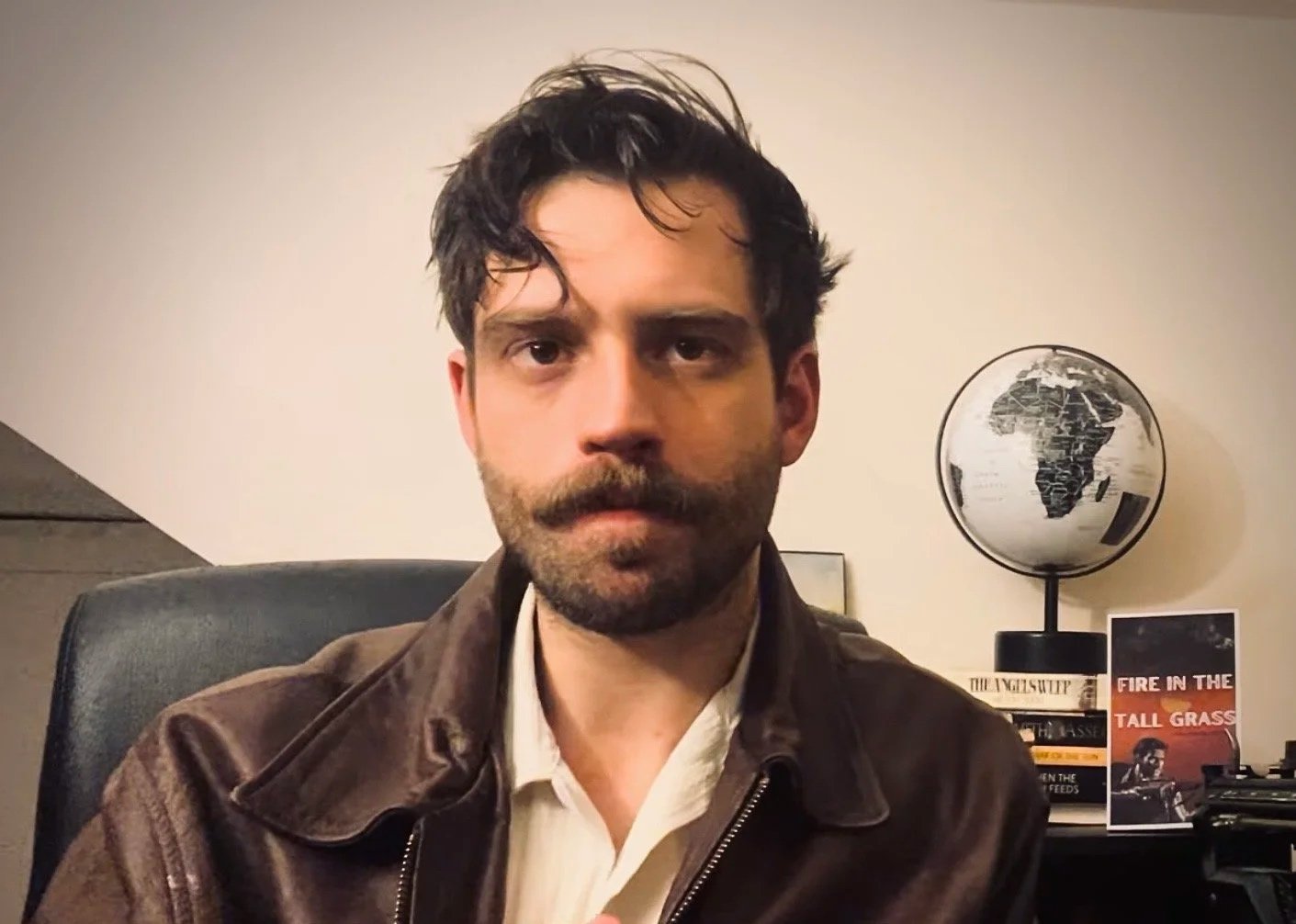
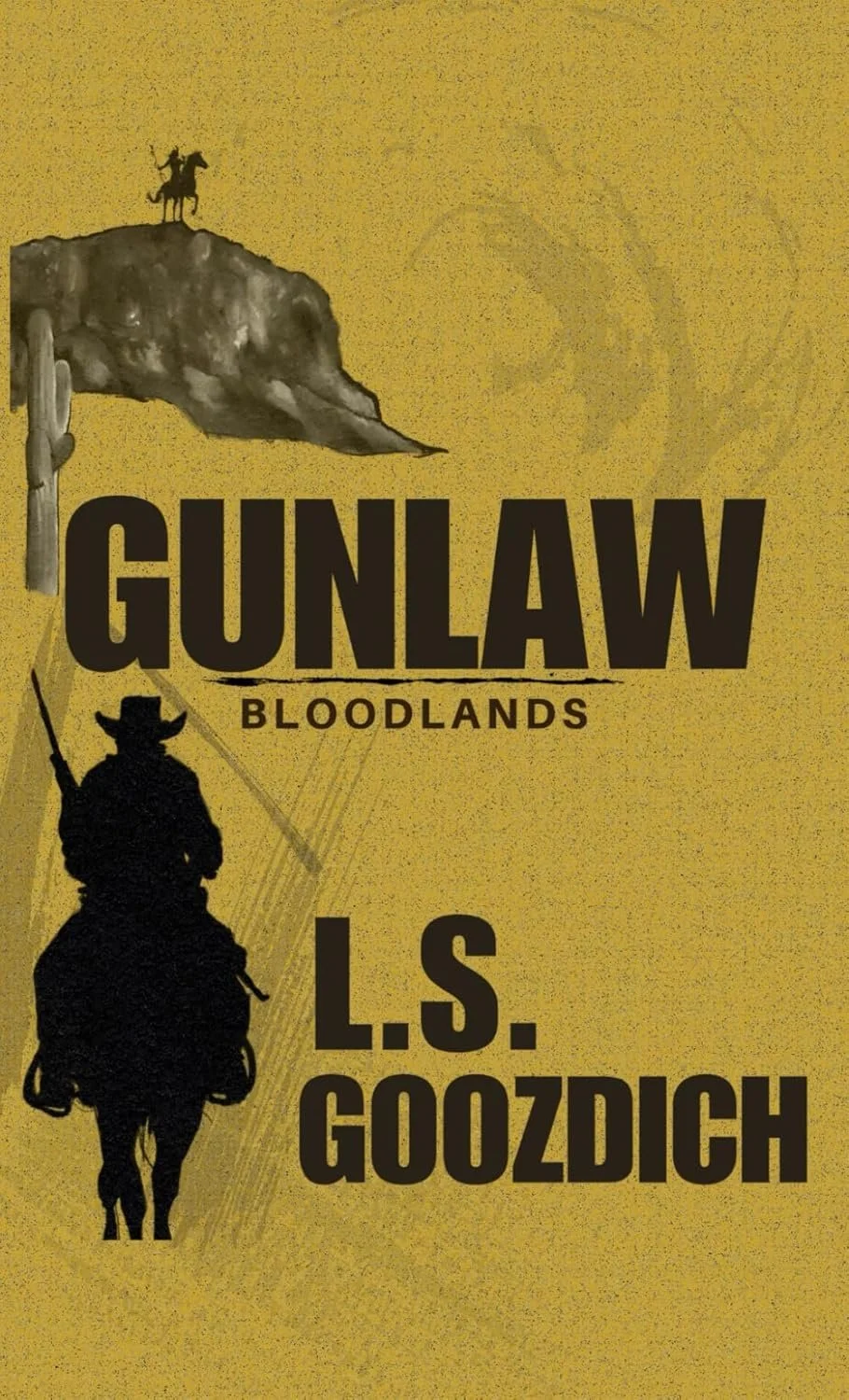
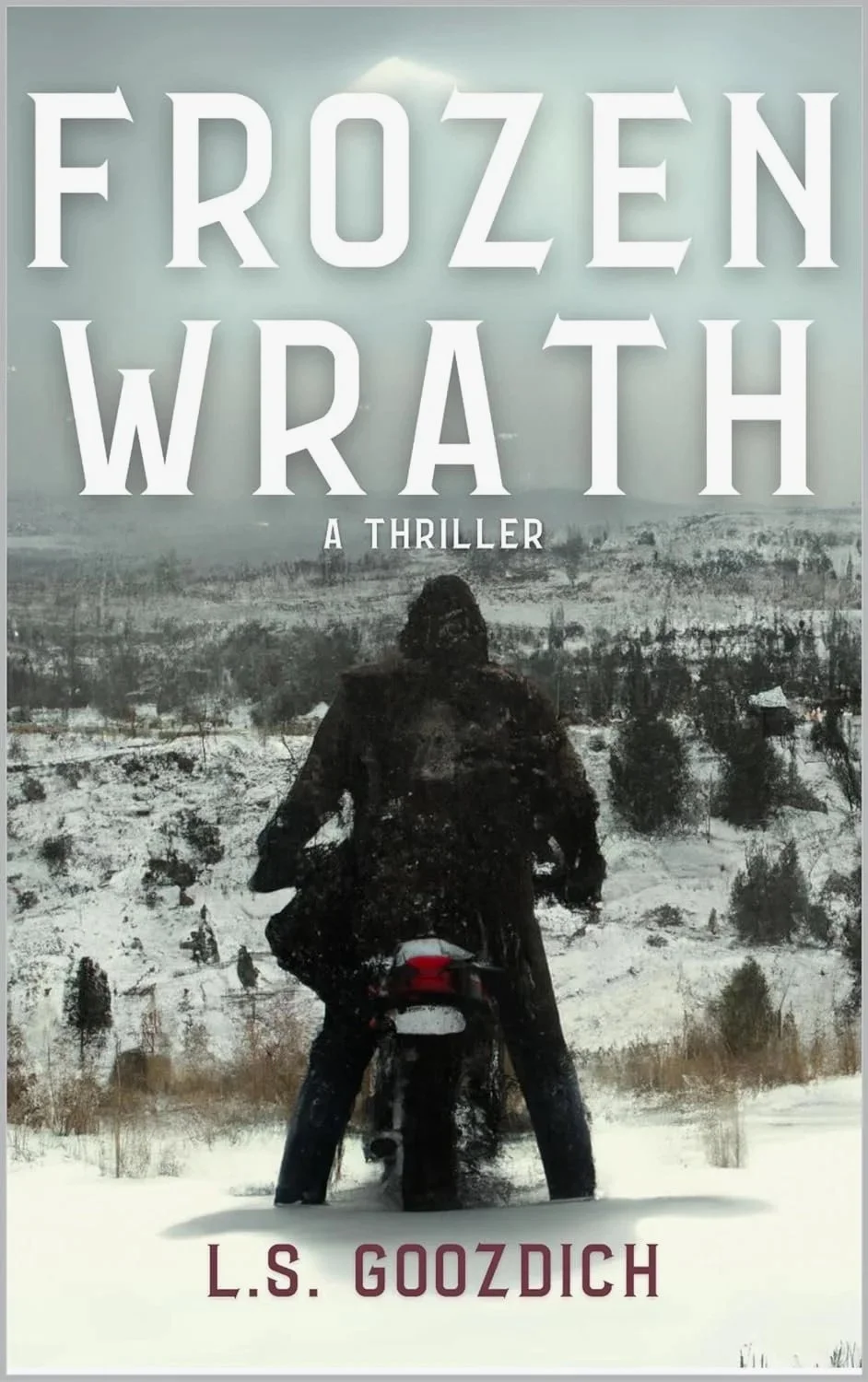
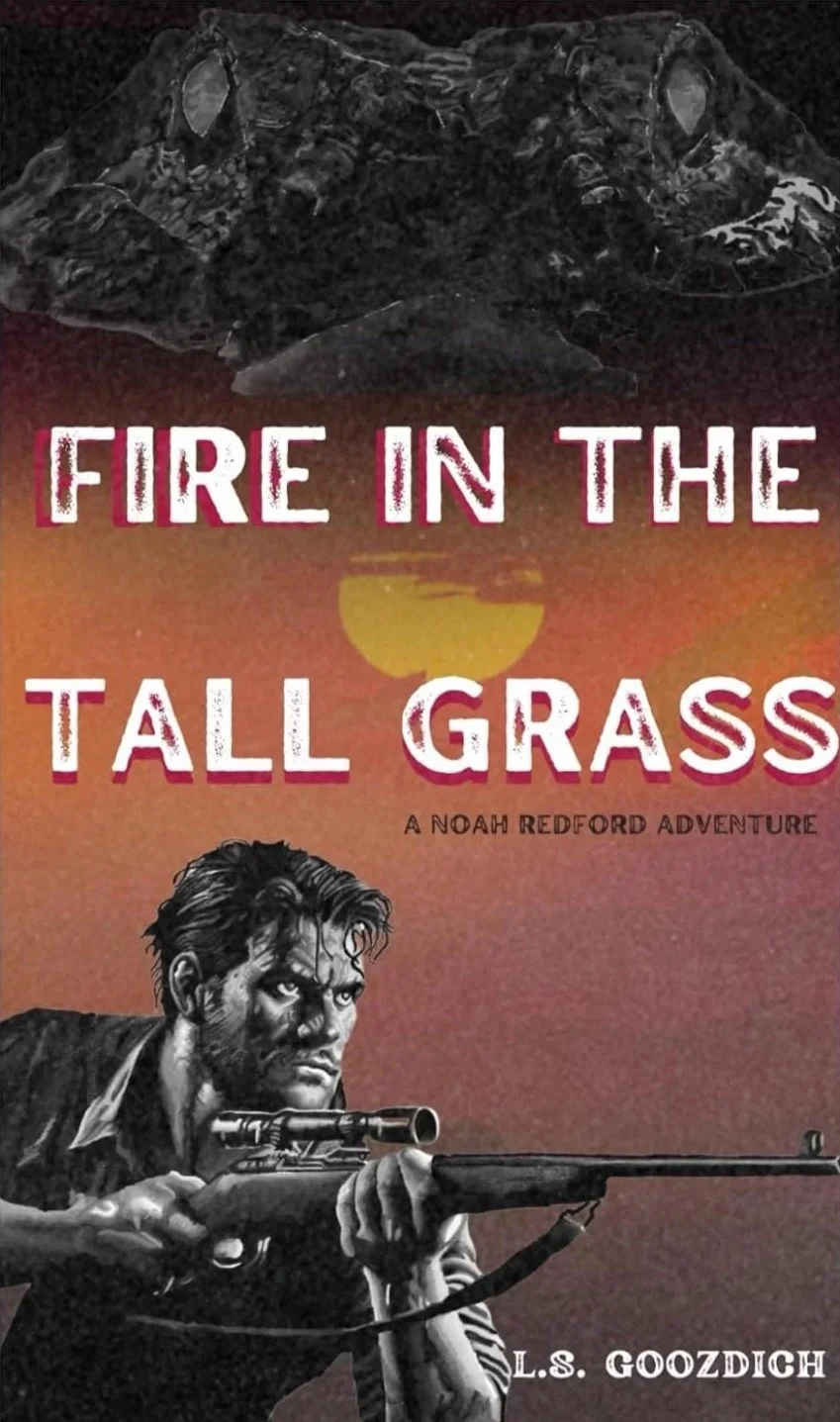
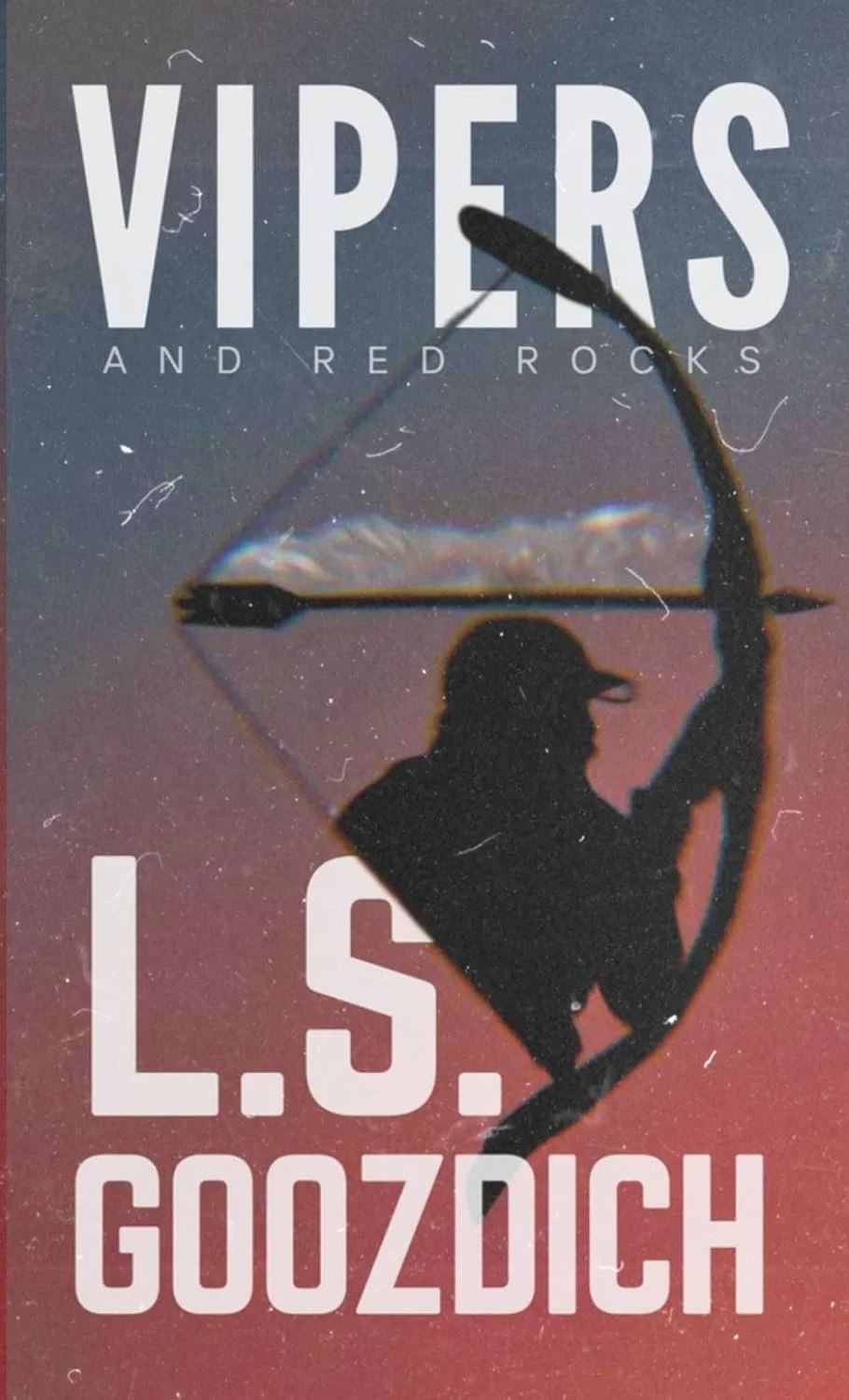
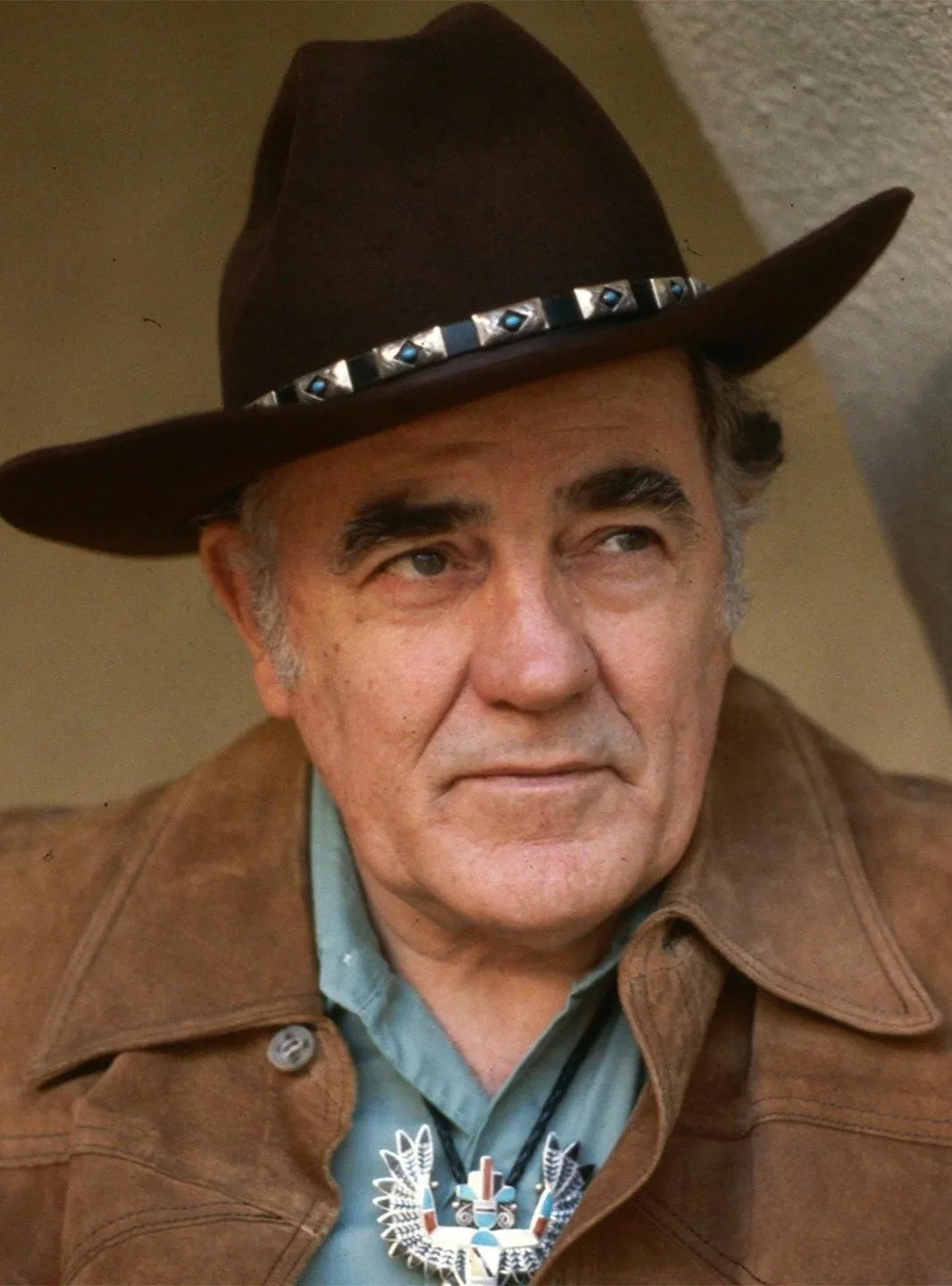
L.S. Goozdich is the author of the novels Gunlaw: Bloodlands, Frozen Wrath, Vipers & Red Rocks, and Fire In The Tall Grass. When he’s not writing, he runs the YouTube channel L.S. Author, works as a licensed mental health counselor, and enjoys life with his wife and children.
✦✦✦
I guess I’ll start by asking what caused you to take an interest in 1) storytelling in general, but also 2) men’s adventure fiction specifically? Did you acquire this interest as a boy, when you were grown, or did different aspects of your interest arrive at different points?
I have been into storytelling, as a whole, as long as I can remember. One of the earliest memories I have involves me being videoed on the home camera dressed as Superman, and I remember acting out a scene and wanting to tell a story there in that moment.
That filmmaking angle is really how it started for me and how it developed throughout the years. I met my best friend, and one of the cofounders of Veritas Entertainment, Casey Moran in third grade. Every weekend we would film a movie together. That’s how I started out as a storyteller during the school week. I’d write the scripts and on the weekends we’d shoot the movies. We did this until maybe sophomore year of high school.
As far as the interest in men’s adventure fiction goes… 99% of the stuff we were writing was pure action. Rocky was the number one biggest inspiration in my life, both throughout my health struggles and in my pursuit of a career as a writer. That film is where I learned the modern mythology of the action hero, and how adventure fiction and these more rugged characters can really be developmental to one’s resilience. That’s what I saw in my own life and I wanted to give back to others with my stories.
We’ll talk about Veritas Entertainment in a little bit, because I think it’s an incredible publishing project. But one thing I sorta wanted to get to right away was how your writing—if I’m interpreting you correctly by remarks you’ve made in the past—is a large part of what motivates you through your current health battles. For those who might be unfamiliar with your life and work, how severe are these battles and (besides Rocky) what archetypes, myths, and novels have helped you the most in accepting and overcoming any fears you have?
This health thing of mine started before I was born. My parents were told my chance of making it were less than a 1%. I had two open-heart surgeries before I had memories. Stories about overcoming or about fighting forward have always been so therapeutic for me; of course Rocky being the first and most formative in my life.
Outside of that, I was drawn to stories of survival. It became my favorite sub-genre. This led me down the path of Louis L’Amour, who I would say is my favorite author. The western genre is so great because—in some way—they’re always survival tales. Knowing that life can be (and has been) harder helps me face my heart condition.
It’s incurable and it’s going to kill me.
How long? No one really knows.
But, I can tell you that leaning on the strength of the archetypes and characters of the men’s adventure genre really does make it that much easier for me to get myself out of bed and hold fast to the fight. My writing synthesizes all of this, and when I’m writing my novels I’m inherently crafting my personal philosophies. This is why I believe everyone should write. Even if you don’t want to be a writer, there’s a very powerful experience that can take place where your innermost self reveals and articulates itself on the page. You project more than you know onto the page, even when writing fiction.
I couldn’t agree more. So much of who we are is hidden from us, and can only be brought out while writing, and normally while writing in a quiet surrounding. I think most people have no hope of knowing who they are or what they believe if they don’t learn how to sit in silence and try to articulate on paper what’s on their mind and heart.
Also, you and I share a love of Louis L’Amour. I mentioned to you before we started that your novel Gunlaw was the best western I had read since L’Amour’s novel Lonesome Gods (which is my all-time favorite of his books). But in one of your YouTube commentaries you mentioned dissatisfaction with Gunlaw’s protagonist Cole Hartnett; saying something along the lines of him not being a deeply illustrated character. I disagree, I really enjoyed Cole Hartnett, but you touch on an interesting dilemma faced by a lot of fiction writers, which is that there’s a fine line between having “cardboard cutout characters” and overdeveloping characters to where—essentially—a novel becomes a series of profiles with small stretches of plot in between. I’ve yet to read your latest book Fire In The Tall Grass, but do you feel like you struck a better balance with Tall Grass’s Noah Redford than with Gunlaw’s Cole?
I’m so happy you liked Gunlaw, really. Especially because, yes, I do have a bit of insecurity around that book. I’m not sure I landed that one the way I intended. One major difference is that I typically never write in the first person. For me, that was a new kind of challenge and one I need to improve on. My writing philosophy around characters lends itself more to third person. I am all about “character in action”. So, counterintuitively, going in the mind of my protagonist threw me off. Noah Redford is the character I feel I’ve done better with, certainly. There is so much depth with him that I’m continuing to work out, but I think writers often rush to reveal all that right off the rip. Fire In The Tall Grass only gives you a few scraps of insight, and I think when done well this is a better option. Particularly for series characters we will continue to see in many more books to come.
Veritas Entertainment is the publishing company that releases your titles, among the titles of other authors, but what is the grand vision of Veritas Entertainment and how many people are involved in running the company? Is the goal to revive men’s adventure fiction across genres (westerns, noir, sci-fi, military, etc.), or is it more broad than that?
Veritas Entertainment was founded by myself and two of my very best friends, Nathanael Hummel and Casey Moran. Our three names are the ones doing the taxes and the boring stuff, but Team Veritas is more like a massive collective. A group of men and women who believe in classic storytelling of all genres. We believe in giving scrappy passionate storytellers who are chasing their writing goals a place to showcase their talents. There are many barriers to getting a book out there, and we want to take away as many of those barriers as possible. Editing, cover design, marketing, formatting, all of it is a headache we absorb so the creative can just be creative. We have worked with nearly 100 creatives already and it’s been a remarkably enriching experience. As for the future of Veritas Entertainment, our goal is to grow and expand our platform so that we can shine a bigger and brighter light on our authors. Furthermore, we’re planning to break into filmmaking and our first feature film starts production this coming fall. It would be fantastic for us to do the same thing for filmmakers that we do for writers.
The elephant in the room for that is marketing, of course. How has your journey been in finding out what’s effective as far as getting the word out to potential readers who haven’t yet discovered a source for contemporary adventure fiction? You mentioned briefly that Veritas wants to expand its platform. Is there a certain strategy that so far as has worked pretty well for y’all, or is marketing and promotion still a significant challenge?
Marketing is a lot of fun. To me, it’s been like a game or sport that I am very new to. I’m learning, failing, making strides, seeing growth, all of it. I have found most of my success via Instagram. Last month, January, Fire In The Tall Grass sold 360 copies. That monthly number has been taking bigger leaps month-by-month and it’s mostly all been Instagram momentum.
Another major part of the Veritas marketing strategy is to really lean into in-person human connection. Veritas will be live, in the flesh, at many events this year. Shaking hands and looking people in the eyes is going to be a massive part of how we grow. On that note, for any readers of this, one event that we are pumped for is PulpFest! July 30th-August 2nd. We are trying to bring out as many Team Veritas members as humanly possible for that one.
It’s the one in Pittsburgh, correct? I may be going there myself this year, and I’m glad you raise the subject of pulp because I think—to me anyway—while “pulp” is not technically a genre (it’s a form of storytelling that can be present in various genres including western, sci-fi, fantasy, crime, etc.), pulp nevertheless represents a style of storytelling that one no longer finds in the modern novel despite being loved by so many readers.
I gather pulp is attractive to you because of what you said about being inspired in early life by tales of fighting and overcoming, “men’s adventure” stories, as well as your favorite author being Louis L’Amour. But expound a little bit on what you think pulp has to offer young readers (and particularly young men) who feel alienated by today’s media and publishing landscape. Is there something about the way pulp speaks to its readers that can be refreshing to a generation who, in large part, have been demoralized by politicized and postmodern storytelling?
I wrote a little essay that I put at the beginning of Fire In The Tall Grass which really captures, I think, what moves me toward that type of storytelling. Essentially, I have the belief that young men are inevitably bringing close to them some kind of philosophy or role model when they dive into fiction. The stories they consume really matter. They do help shape our understanding of right and wrong. Good and evil. What a man’s role is.
This modern era of storytelling has been really invested in moral gray and the deconstruction of heroes. I fell into that trap myself a bit with my first book, but then I had a son, and I began to think more seriously about what kind of content I wanted him to consume. From the world, but especially from me. That’s what made me realize that I love this old school, morally clear heroic type of storytelling. Yes it’s idealistic and not the most realistic… but that’s kind of the point. I love when stories are idealistic. I love having a North Star to look to. For young men, I think pulp stories offer a fun and accessible way into the habit of reading, and I think it also shows them that their masculinity has something of value to offer if honed correctly.
To wrap up, I want to give you the choice to end either with advice for new writers or to end with your favorite joke.
I’ll end with a piece of advice to young men and new writers. For both, I want to encourage you to let go of your fidelity to perfectionism. Give yourself permission to fail forward. Too many people let their life, their story idea, their business idea, and their future stay trapped in their minds. The acceptance of a quiet internal defeat seems somehow easier than the fear of a public failing of any kind. At the end of your days, you will not see it that way. Do not let your dream be trapped in your grave. Go do it badly. Try and try again. That is the way you build anything worthwhile.