“‘America First’ is a natural position. It would be unnatural to have a different position. But ‘America First’ doesn’t mean ‘America Alone’. Because all countries need allies. Superpowers need allies. China has allies. Russia has allies. And if you’re without allies, who maybe develop technologies that are needed for your defense, or develop technologies that are needed for your offense, or gather intelligence that could save your citizens’ lives, why would you forfeit yourself of these allies? The problem you have had [for a long time] in the United States, if you’ve had allies who haven’t pulled their weight. But Israel is a fighting ally. Israel has always pulled its weight.”
—Israeli Prime Minister Benjamin Netanyahu—
✦✦✦
There’s a defensible element of American non-interventionism which simply believes that America should do its best to stay out of foreign conflicts that yield no benefit to the country and cost taxpayers too much money.
I sympathize with this view.
The majority of us are old enough to remember the boondoggle that was the Iraq War. The majority of us are old enough to remember the 2001 liberation of Afghanistan from the Taliban, only to withdraw 20 years later and give the country over to *checking notes* the Taliban. And most of us were not too pleased, when, beginning in 2022, the U.S. government sent billions of dollars and military equipment to Ukraine only for that conflict likely to end with a stalemate where Russians gain territory and Ukrainians lose territory.
Americans are war fatigued.
And—even if we laid aside the question of whether America being the World’s Police is a realistic pursuit—truth be told, being the World’s Police doesn’t sound like a knee-slappin’ barn-stompin’ good time for our children and grandchildren. It sounds like a bit of a drag.
In addition, it cannot be understated how badly the general public loathes World Policing’s most famous and indefatigable proponents; Denethors whose hellbent fixation on taking and retaking various Osgiliaths never seem to result in the loss of their own sons. Their delivery of pro-war talking points on cable news and in mainstream opinion columns always comes off as creepy, yucky, almost cult-like: “WE MUST GET INVOLVED IN THE CONFLICT IN DURKADURKASTAN, BECAUSE THE WAR GODS NEED TO BE FED WITH THE FRESH SOULS OF LOW INCOME HIGHSCHOOL GRADUATES.” These people never only advocate for one specific conflict or alliance, no. They make their living advocating for U.S. entry into every single war proposed by any president regardless of party. It’s not any particular international cause these vampires feel invested in. Rather they feel invested only in the idea that the U.S. should be involved in lots of international causes.
So I understand the perspective of non-interventionists who point out the absurdities of interventionist foreign policy, and who adopt the general rule of thumb: “Whatever Bill Kristol or John Bolton or Lindsey Graham suggest, let’s do the opposite, ‘cause those guys are cartoon villains.”
But there’s also an indefensible element to the American non-interventionist movement, and that is that large swaths of the non-interventionist movement tend to indulge in conspiracy theories about a certain successful minority group who they claim is “responsible” for “dragging” America into foreign wars. To put it in even cruder terms, some non-interventionists are a little weird about Jews. Ezra Pound fell down this well. As did Pat Buchanan. As did Joseph Sobran. As has Tucker Carlson in the present day.
For my part, I think it unwise for a person to define themselves as a strict non-interventionist or interventionist. When it comes to war and allies, I’m more inclined to take on the label of Jacksonian: that is, I don’t believe in “nation-building”, or in “making the world safe for democracy”, or in propping up puppet leaders, but I do believe the United States should use its full weight to ruthlessly pursue and eliminate any individual who attacks American citizens or even expresses a desire to attack American citizens. By extension, if an entire country has a history of funding terrorist attacks against us and wishing us dead, we ought to raze that country’s cities, mount heads on pikes, and leave. Go and destroy. That’s it. I don’t want America to be an empire in the sense that it attempts (and fails) to maintain global order at great expense to itself. But I do want America to be an “empire” in the sense that people around the world understand not to ever ever fuck with us, because we will wear their skin, drink their blood, and feast on the marrow of their bones while dancing naked around fires.
(This ruthlessness applies in the case of the harm of any American citizen, regardless of social or economic status. The message needs to be stated—yes stated, by a U.S. president—that the poorest and dumbest American traveling abroad is worth more than the richest and smartest foreigner in their own country. No Iranian official or Saudi prince or Chinese mogul or Russian oligarch should be immune from a public, gruesome, humiliating end if they cause death or injury to an American. With the U.S. arsenal estimated to be worth over $1 trillion annually, and with CIA presence in almost every single country, there is no reason why every human on the planet shouldn’t have the bone-deep understanding that American lives are extremely expensive. So expensive that one would be better off killing the last white rhinoceros. And what gives the United States the right to declare its people to be “the most valuable” in the world? Power of course. But power, like money, is of little use if it is not spent. Power is meaningless without will. It goes without saying that the fear-and-trembling I’ve spoken of is something our country’s power ought to purchase, but the real question is whether our nation ever acquires the will to enforce the protection and avenging of its citizens without reluctance or apology.)
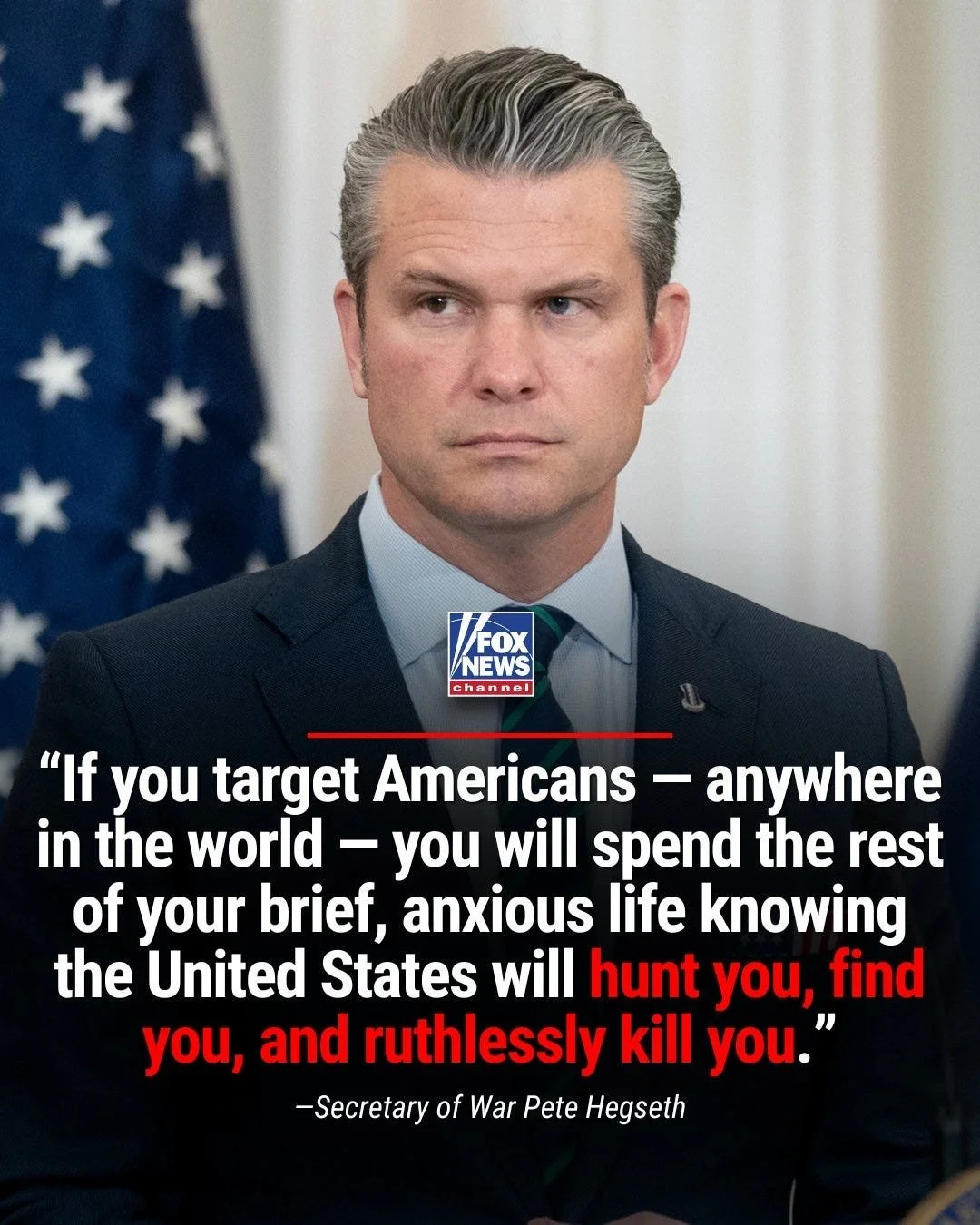

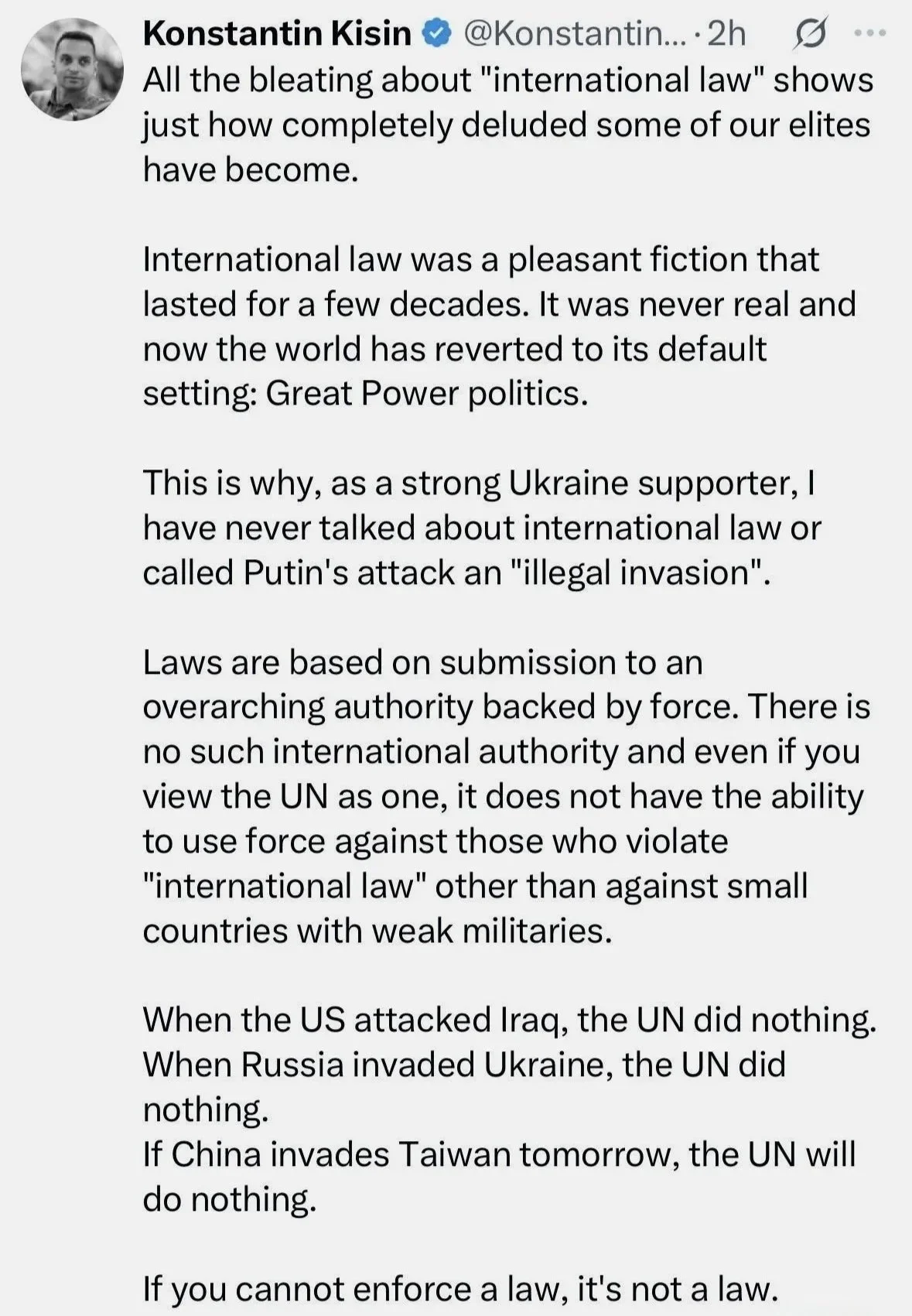
No doubt this inthendiary rhetoric brings tears to the limpest wrists in the land, who whimper as they shimmy that “real democracies respect and follow international law”. To which my quick and blunt rejoinder is that “international law” isn’t real, has only ever been believed in by those who are impotent and feckless (and possess only enough self-awareness to be resentful about their impotence and fecklessness), and that the only true law which exists between nations is the law of might. Everybody’s a Roman on the inside. Even those who like to think they aren’t.

With my Jacksonian perspective of American foreign policy in mind, then, I have to admit that my opinion on the U.S.-Israel alliance is somewhat conflicted.
From the Israel side, I think there’s an obvious drawback to taking so much support from the U.S. Mainly, that the more material and financial support the Jewish state receives from the U.S., the more leverage the U.S. government has over the decisions Israel makes regarding its own survival; regardless of whether or not the decisions the U.S. wants Israel to make are in the best interest of Israeli citizens. In the past there have been several key moments where Israel has wanted to strike her enemies, but wound up backing out because of U.S. pressure. There were also key moments in Israel’s most recent war in Gaza, where the U.S.—under the Biden administration—tried threatening Israel with an arms embargo if they didn’t do what “older brother” told them. (Thankfully when the U.S. tried to prevent Israel from invading Rafah, Israel told the U.S. to eat their asshole, and subsequently saved two hostages in Rafah and killed Hamas leader Yahya Sinwar). I also think that Israel taking support from the U.S. opens it up to perceptions that it’s a vassal state. And it’s not. The reestablishment of Israel in 1948 was the long anticipated fulfillment of over 1,300 years of diaspora Jewish hopes and dreams. But the perception that Israel is an American vassal state persists nevertheless. To avoid this continued perception, and to secure greater autonomy for itself, I hope Israel ultimately reaches a place of greater self-sufficiency and relies less on American help.
But from the U.S. side, it seems to me that the benefits of America’s alliance with Israel are so vastly lopsided in our favor, that the U.S. government should be willing to do almost anything to preserve it. What are these benefits? Well let’s see…
Israel constantly provides vital intelligence to the U.S. about terrorist networks, attack plots, and fraud. In fact Israel’s intelligence capabilities are so good (globally, not just in the Middle East), that according to Fmr. Air Force Intelligence Chief Gen. George F. Keegan, Mossad alone “is worth five CIAs”. Because of this, Israel’s sharing of intelligence winds up saving the U.S. approximately $15 billion annually by saving us the trouble of having to gather the same information ourselves.
Israeli soldiers engage in more combat more frequently than any other military in the world, and they do so largely while using our equipment. A specific example we could look to is U.S. aircraft. It is well known in the defense industry that Israeli pilots have been the most active operators of American F-16s since the development of the F-16 in 1974. Because of this, a majority of the upgrades that have been made to the F-16 since 1974 have been due to the lessons learned by Israeli pilots flying daily and conducting high-risk missions. The same is true of other aircraft. American aerospace companies contracted by the United States consistently benefit from frequent use of aircraft and missile systems by Israeli pilots, who share their experiences and criticisms.
Israel’s technological advances in desalination, wastewater recycling, drip irrigation, and precision agriculture have directly influenced America’s water management strategies; particularly in drought-stricken states like California, Arizona, and Nevada. Israel now recycles 90% of its wastewater (far beyond any other country), and the methods developed there are increasingly helpful to the U.S., which is currently facing long term water scarcity.
Israel contributes disproportionately to medical innovation; particularly in the areas of trauma care, emergency medicine, and battlefield-to-hospital treatment. Decades of experience handling mass-casualty events have allowed Israel to produce advances in hemorrhage control, triage protocols, telemedicine, prosthetics, rehabilitation, and PTSD treatment that directly benefit American civilian and military medicine. Many techniques that are now standard in U.S. emergency rooms—especially those dealing with blast injuries and complex trauma—were refined first in Israeli hospitals.
Israeli startups punch absurdly above their weight in fields like cybersecurity, semiconductors, software infrastructure, and data analytics… all fields, by the way, that increasingly determine which countries have the advantage in a major conflict. Because of this, American companies routinely acquire Israeli firms or integrate Israeli R&D teams directly into their own operations; effectively outsourcing some of the most expensive and cutting-edge innovation work to a close ally that has aligned strategic interests.
Israel has a track record of sending rapid-deployment search-and-rescue and medical teams into the United States during natural disasters and infrastructure disasters. Israeli units—especially those drawn from the IDF Home Front Command—specialize in urban search-and-rescue, collapsed structure extraction, and emergency medical triage under chaotic conditions. When hurricanes, earthquakes, or building/bridge failures occur in the U.S., Israeli teams arrive with their own logistics and equipment and are able to operate independently without burdening local responders. This isn’t symbolic aid or PR theater, but practical boots-on-the-ground help that saves American lives. Having an ally capable of rapidly inserting elite disaster response teams onto American soil during extreme crises is an amazing asset, and no other ally even comes close to providing the same level of aid.
Israel is a quiet leader in pediatric medicine, and the U.S. benefits from this more than most people probably realize. Israeli researchers in children’s hospitals are experts when it comes to early diagnosis, neonatal care, pediatric cardiology, genetic screening, and digital health systems designed specifically for kids. And because Israel tracks population-wide health data from the moment of birth for its citizens, it’s able to identify childhood diseases earlier, track developmental outcomes more precisely, and test interventions at scale; which are insights that flow directly into American pediatric practices, pharmaceutical development, and medical device innovation.
Ultimately, when it comes to the gross strand of non-interventionists who oppose certain alliances—not based on well-reasoned objections—but because they think “the Jewish lobby” conspires to keep the country in a state of perpetual warfare, there’s nothing that can be said to these types, because they’re fighting figments of their imaginations. You can’t win an argument with somebody’s imagination.
But once people of sound mind lean back and get a big-picture view of just how many different ways an alliance with Israel benefits the U.S. (defense related and non-defense related), it becomes pretty clear that America ending this alliance would amount to a major world superpower essentially cutting off its most reliable source of intelligence, innovation, and crisis response. More importantly, America ending its alliance with Israel would be the opposite of Jacksonian, because it would amount to a major world superpower needlessly cutting off its greatest partner in the fight to protect our citizens at home and abroad.
The ending of this alliance—contrary to what the non-interventionist movement and the rightwing antisemites who overlap with them might think—only serves to fuck over the United States.
In the event of the alliance ending between the United States and Israel, Israel would be the one country out of the two who would be just fine. All they’d have to do is replace the United States as its biggest partner by making an alliance (or multiple alliances) with another powerful country (or countries). India, for example. India is the most populated country on earth, its military is the second largest in the world, they have a massive nuclear arsenal, and by the end of the 21st century it’s projected to become the world largest economy (surpassing both China and the United States); which makes them a very valuable ally, and one that Israel is already on great terms with. Moreover, India’s large Hindu population shares a natural solidarity with Israelis due to being targeted by radical Islamists themselves! Is this what isolationist American conservatives really want? A country that provides the best counterterrorism intelligence, medical technology, and agricultural innovation in the world to stop providing those things to us, pick up its ball, and play with someone else? I can’t think of anything less “America First”.